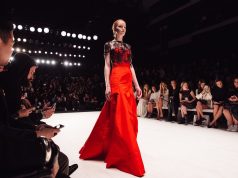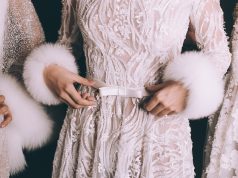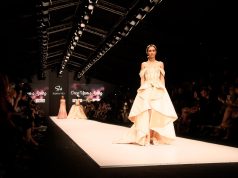


When it comes to cities that shape the trajectory of global fashion, Milan stands in a class of its own. Renowned for its rich heritage in luxury craftsmanship, forward-thinking design, and sartorial precision, Milan Fashion Week continues to be more than just a calendar event—it is a cultural litmus test. What appears on the Milanese runways not only forecasts what we’ll be wearing next season but also reflects broader shifts in identity, culture, and aesthetic values.
Each season, Milan manages to bridge the gap between heritage and innovation. Unlike the more experimental edge of London or the glamour-drenched theatrics of Paris, Milan walks a refined, tailored line, yet constantly evolves. In the most recent showing, designers embraced this duality, presenting collections that felt like both a nod to the past and a vision of the future. From quiet luxury and tech-infused tailoring to bold reinventions of classics, Milan delivered a layered conversation on fashion’s role today.
This essay explores the standout trends from Milan—not as isolated fads, but as expressions of deeper themes in style, self-perception, and society.
The Rise of Quiet Luxury
One of the most pronounced themes emerging from Milan’s runways is the continued dominance of “quiet luxury.” This trend doesn’t scream opulence—it whispers it. Think cashmere twinsets in muted tones, expertly cut blazers, leather loafers with understated hardware, and minimalist silhouettes rendered in the finest fabrics.
Unlike logo-heavy fashion of past decades, quiet luxury speaks to a new kind of confidence—one that doesn’t need validation. It’s wealth without noise. At Prada, we saw a parade of clean lines, neutral palettes, and garments that looked deceptively simple but spoke volumes in construction. Bottega Veneta followed suit, showcasing buttery-soft leather pieces and woven craftsmanship that emphasized tactile richness over visual flamboyance.
This is fashion’s way of returning to the essentials, to timelessness. In an era of economic uncertainty and environmental awareness, the message is clear: buy better, buy less, and invest in pieces that transcend seasons.
Reimagining Tailoring: Deconstruction and Play
While quiet luxury gave us simplicity, another narrative in Milan played with the idea of tailoring—but with a twist. Designers didn’t abandon structure; they reimagined it. Blazers were slashed and asymmetrical, trousers flared unexpectedly, and suits came with exaggerated shoulders or unexpected textures.
Labels like Dolce & Gabbana and Fendi brought a new fluidity to traditional menswear staples, blending masculine codes with softer, more experimental cuts. Tailoring is no longer confined to the boardroom—it’s been liberated and recontextualized for a generation that sees identity as flexible.
Even the classic trench coat got a refresh. At Max Mara, trench coats came cropped, doubled-up, and layered with contrasting textures. It’s clear that Milan is pushing fashion to not only dress the body but to express a multitude of selves.
Texture as Narrative
If there was one trend that united many collections across Milan, it was the obsession with texture. From feathery fringe and velvet to neoprene, faux fur, and lattice knits, texture became a storytelling device.
At Giorgio Armani, velvet took center stage—used not just in evening wear, but in casual separates, signaling a shift toward everyday elegance. Etro played with embroidered fabrics that echoed global travel and tactile history. Meanwhile, Ferragamo layered sleek latex with flowing silks, creating visual tension and contrast.
Texture in Milan is about more than just touch. It’s about evoking mood, memory, and even mythology. In a digital age where our screens dominate sensory experiences, these tangible details ground us in the physical world. They ask us to slow down and feel something.
Futuristic Femininity
Another key trend from Milan was the reimagining of femininity—one that isn’t rooted in softness alone. Designers explored strength through silhouette, fabric, and color. The result was a futuristic femininity that felt empowered and intelligent.
At Versace, corsetry returned, but not in the context of restriction. Instead, it was armor-like—structured, bold, and gleaming. Models looked like modern-day heroines, ready to battle convention. Alberta Ferretti went another route, exploring fluid draping in metallic fabrics that moved like liquid on the runway.
Even accessories echoed this theme—oversized sunglasses, metallic boots, and geometric handbags. Milan is carving out a new vision of the feminine: part goddess, part warrior, fully in command.
Color with Intention
While neutrals had their moment, Milan also reminded us of the emotional power of color. The palette this season was both precise and evocative.
Burnt sienna, olive green, and dusty rose dominated many collections, evoking natural landscapes and subtle nostalgia. These were not your bright spring florals, but hues with depth and story. At Marni, abstract prints in ochre and moss green clashed and harmonized on oversized coats and shirtdresses. Missoni leaned into muted rainbow stripes that felt familiar yet unexpected.
Meanwhile, pops of high-impact color—think cobalt, fire-engine red, and electric yellow—emerged in accessories and layering pieces, adding punctuation to otherwise muted looks. The use of color in Milan wasn’t trend-chasing; it was intentional, artistic, and emotion-driven.
Gender Fluidity as Foundation, Not Feature
One of the most progressive elements of Milan’s runways this season was the seamless blending of gender across collections. But this wasn’t performative. It wasn’t about shocking audiences with men in skirts or women in oversized tuxedos. Instead, it was a quiet normalization of fashion without gendered borders.
Gucci continued its exploration of androgyny with lace blouses for men and oversized outerwear for women, all styled interchangeably. JW Anderson offered tunics and culottes that felt truly unisex. And labels like Sunnei and MSGM embraced a joyful playfulness that prioritized individuality over traditional gender norms.
This isn’t a “trend” in the fleeting sense. It’s the future of fashion, where clothing is a tool of expression, not a prescription based on biology.
Nostalgia Reworked
Nostalgia was another undercurrent running through Milan Fashion Week—but it wasn’t sentimental. It was purposeful and often ironic. Designers referenced the ‘90s, early 2000s, even the baroque opulence of earlier centuries, but with a contemporary eye.
Diesel leaned into early-aughts denim culture, but with exaggerated silhouettes and layered textures that updated the look for now. Moschino played with punk elements and vintage silhouettes, but paired them with tongue-in-cheek accessories and clashing prints. Milan wasn’t simply looking back—it was remixing, re-evaluating, and reintroducing history to a generation that’s asking “what does fashion mean to me?”
Sustainability as Aesthetic
Finally, Milan continued its pivot toward sustainability—not just as a corporate initiative, but as a design philosophy. Several collections emphasized recycled materials, artisanal production, and modular fashion.
Stella Jean and other emerging designers showcased looks made entirely from upcycled fabric, while brands like MSGM highlighted transparency in sourcing and ethical labor. Even the silhouettes reflected this shift—clothing was made to last, to transform, and to be reinterpreted season after season.
In Milan, sustainability is no longer just greenwashing. It’s becoming integral to how fashion is imagined and consumed.